Your modified bitumen roof is leaking, and water damage is a big worry. Drips, cracks, and mold growth are nightmares for homeowners. These problems can turn into big, costly issues fast.
But, fixing your modified bitumen roof isn’t hard. With the right tools and knowledge, you can fix leaks and cracks. This guide will show you how to repair your roof step by step. You’ll learn to handle common problems with confidence.
Read also: What is Modified Bitumen Roof? Built to Last & Protect
What is Modified Bitumen Roofing and Why Does It Need Repair
I’ve worked with many roofs, and modified bitumen has changed the game for flat and low-slope roofs. It mixes old asphalt tech with new polymer science. This makes a strong and flexible roof.

Modified bitumen roofs are a smart way to protect buildings. They use special polymers to make them last longer and work better than old roofs.
Understanding the Composition of Modified Bitumen Systems
What makes modified bitumen roofs special is how they’re made. They mix bitumen (a byproduct of oil) with polymers like APP or SBS. This mix boosts the roof’s strength and flexibility.
- APP polymers help the roof handle heat well
- SBS polymers make the roof flexible in cold
- Fiberglass or polyester adds strength
Common Causes of Damage in Modified Bitumen Roofs
Even top-notch roofs can get damaged. Knowing why helps keep your roof in good shape.
- Heat can cause the roof to expand and contract
- Water can damage the roof over time
- UV rays can weaken the polymers
- Foot traffic or falling objects can harm the roof
Regular checks and care can make your roof last longer. This stops small problems from becoming big, expensive fixes.
Read also: How Long Should a Roof Last and What Makes
Identifying Damage: Signs Your Modified Bitumen Roof Needs Attention
Spotting problems early with your modified bitumen roof can save you a lot of money. As a homeowner, it’s important to know the signs of roof damage. This helps keep your flat roof in good shape and avoids costly repairs.
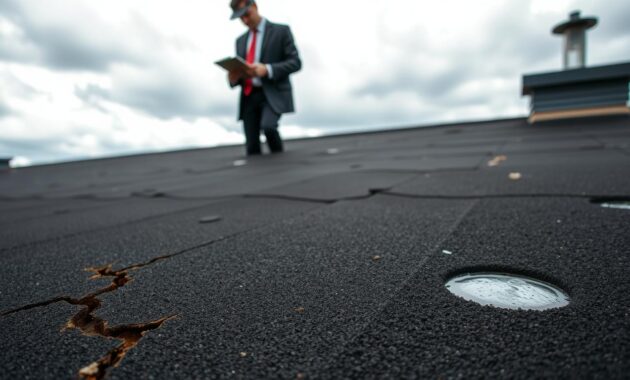
Regular checks are key to avoiding big roof problems. I suggest doing visual inspections twice a year – in spring and fall. Also, check after big storms. These checks help find issues before they get worse.
- Interior water stains on ceilings or walls
- Visible blisters or bubbles on the roof surface
- Cracks or splits in the roofing membrane
- Water ponding in low-elevation areas
- Loose or separated seam connections
- Punctures or tears in the roofing material
- Failing flashing around roof penetrations
When you inspect your roof, look for these signs from inside and outside. Even small problems like blisters might not leak right away. But, they can harm your roof’s performance if not fixed.
| Damage Type | Potential Consequences | Recommended Action |
|---|---|---|
| Surface Blisters | Membrane Weakness | Professional Inspection |
| Membrane Cracks | Water Infiltration | Immediate Repair |
| Separated Seams | Structural Compromise | Resealing Required |
Remember, taking care of your roof ahead of time is cheaper than fixing it later. By being proactive and fixing problems fast, you can make your modified bitumen roof last longer. This protects your property from water damage.
Essential Tools and Materials for Modified Bitumen Roof Repair
Starting a bituminous roofing project needs careful planning and the right tools. I’ll show you the key tools and materials for fixing your modified bitumen roof. The right supplies can make a big difference in the success of your repair.

Choosing the Right Bitumen Roof Patch Products
Choosing the right torch-down roof patching materials is very important for a lasting fix. There are different products for different needs, so it’s important to know your options:
- Trowel-grade cement: Thick consistency for large cracks and embedment
- Brush-grade sealant: Thin formula for coating seams
- Self-adhesive patches: Quick emergency repair solution
- Caulk tubes: Precise application for small penetrations
| Product Type | Best Use | Price Range |
|---|---|---|
| Trowel-grade Cement | Large crack repairs | $20-$50 |
| Brush-grade Sealant | Seam coating | $15-$35 |
| Self-adhesive Patches | Quick emergency fixes | $10-$25 |
| Caulk Tubes | Precise small area repairs | $7-$15 |
Safety Equipment and Preparation Supplies
Safety is the most important thing when fixing your roof. It’s wise to invest in good protective gear and tools:
- Safety glasses or goggles
- Heavy-duty work gloves
- Non-slip work boots
- Respirator for solvent-based products
- Wire brush for surface cleaning
- Utility knife
- Measuring tape
- Heat gun (optional)
Spending a bit more on quality tools and safety gear can help avoid injuries. Take your time, follow safety rules, and ask a pro if you’re not sure about anything.
Preparing the Damaged Area for Repair
Fixing a modified bitumen flat roof starts with careful surface prep. As a roofing pro, I’ve seen how skipping this step can fail repairs early. It’s vital to identify and prepare the damaged area well for a lasting fix.

First, find the exact damage spot. It’s not always where water shows inside. Start at the top and work down. Here’s how to get your roof ready:
- Thoroughly clean the damaged area using a stiff wire brush
- Remove all loose debris, dirt, and old roofing material
- Inspect the surface carefully for different types of damage
For specific damage, use these prep methods:
- Blisters: Cut an ‘X’ shape with a utility knife
- Fold back the flaps gently
- Allow the area to dry completely
- Cracks: Ensure edges are clean and stable
- Moisture control: Aim for the driest possible surface
Pro tip: For porous or aged surfaces, apply a compatible roofing primer and let it become tacky before patching. Some emergency products work on slightly damp surfaces, but dry conditions always provide the best results. Taking time with preparation ensures your flat asphalt roof repair will stand the test of time.
Step-by-Step Modified Bitumen Roof Repair Process
Fixing a modified bitumen flat roof is easier than you think. With the right steps, you can handle small damage and stop bigger problems. I’ll show you how to fix your roof like a pro.
Before starting, get ready. Self-adhered modified bitumen repair needs focus and the right methods.
Applying Bitumen Sealant and Reinforcing Fabric
Here’s how to fix a modified bitumen roof step by step:
- Clean the damaged area well, removing dirt or loose stuff
- Put down a 1/8-inch layer of bitumen cement, covering 2-3 inches more than the damage
- For blisters, cut carefully and apply cement underneath before pressing down
- Put a fiberglass fabric into the wet bitumen, making sure it’s fully soaked
- Get rid of air bubbles to make the surface smooth
Sealing Seams and Flashing Around Penetrations
Seams and flashing need extra care in your roof repair. Focus on these key areas:
- Use flexible, waterproof sealant around chimneys, vents, and skylights
- Check all seam overlaps for weak spots
- Apply more bitumen sealant around patch edges for extra protection
Fixing your roof well takes time and care. DIY fixes are okay for small issues, but get a pro for big problems.
Read also: Roof Flashing Repair Cost Guide
Addressing Water Ponding and Drainage Issues on Flat Roofs
Water ponding is a big problem for modified bitumen roofs. It causes stress on the roof membrane, leading to damage over time. Experts say standing water is not just a cosmetic issue but a serious structural problem.
It’s important to know why water ponding happens. Several factors can cause this issue:
- Inadequate roof slope
- Clogged drainage systems
- Structural settling of the roof deck
- Debris blocking water flow
To tackle water ponding, start by checking your roof’s drainage system often. Clean out debris from gutters, drains, and scuppers. Look for signs of sagging or uneven surfaces that might block water flow.
For bigger drainage problems, consider these fixes:
- Install tapered insulation to create a slight slope
- Add additional roof drains in problem areas
- Repair any structural deformations in the roof deck
- Apply professional waterproofing treatments
While you can fix some drainage issues yourself, big ponding problems might need a pro. A commercial roofing expert can find the root cause and suggest the best fixes to keep your roof safe from water damage.
Maintenance Tips to Prevent Future Leaks in Your Modified Bitumen Roof
Keeping your modified bitumen roof in good shape needs regular care and early action. By focusing on sbs membrane restoration and app bitumen maintenance, you can make your roof last longer. This also helps avoid expensive fixes.
Keeping your roof in great shape is all about regular maintenance. I’ll share some key tips to protect your investment and stop leaks before they start.
Regular Inspection Schedule and What to Look For
I suggest checking your roof twice a year – in spring and fall. Here’s a detailed guide for your roof check:
- Look for cracks or splits in the membrane
- Check seams for lifting or separation
- Find any blistering or bubbling
- Clear debris and check drainage
- Check flashing around roof penetrations
- Find areas where water pools
Protective Coatings and Long-Term Care
Protective coatings are key for sbs membrane restoration and app bitumen maintenance. I advise applying reflective coatings every 3-5 years. This boosts your roof’s performance.
| Coating Benefit | Performance Impact |
|---|---|
| UV Protection | Reduces surface damage |
| Thermal Reflection | Lowers cooling costs by 15-30% |
| Membrane Preservation | Extends roof life by 3-5 years |
A well-maintained modified bitumen roof can last 15-20 years. With regular care, you’ll save a lot on replacement costs.
When to Call a Professional Roofing Contractor
DIY fixes might not solve all commercial roof waterproofing problems. Knowing when to call a pro can save you a lot of time and money.
Here are some situations where you should get professional help:
- Extensive damage covering more than 10-15 square feet
- Structural issues with the roof deck
- Recurring leaks in the same area
- Complex repairs needing special commercial roof waterproofing techniques
- Safety concerns with roof access or repair complexity
Professional roofing contractors offer more than just quick fixes. They can find the root cause of problems, use top-grade materials, and fix things fast. Their skills ensure your roof is safe and meets all standards.
While DIY might seem cheaper, big roof jobs need pros. They have the tools, training, and know-how to tackle tough repairs.
Choosing professional repair can save you from bigger costs later. Don’t try to fix things you’re not sure about. It’s better to keep your building safe and sound.
Conclusion
Fixing a modified bitumen roof isn’t hard if you know what to do. You can make your roof last longer and keep your property safe from water damage. The most important thing is to understand your roof and take care of it regularly.
Checking your roof often is key. Finding small problems early can save you a lot of money and time. Whether you fix small issues yourself or call a pro, the goal is to keep your roof in great shape.
Every time you fix something, you learn more about your roof. Take the time to learn about your roof’s materials and how to fix them right. Using good sealants and patches will make your roof last longer and protect your property better.
Roof care is something you do all the time. Stay up to date, act fast, and ask for help when you need it. Your roof is very important for your building’s safety. With the right care, it will keep you safe for many years.